Door Lock Replacement: How to Change a Door Lock Step by Step (UK Guide)
Tuesday, 10 November 2026
Door lock replacement means identifying the lock, measuring it, fitting a compatible part and testing it before closing the door. A euro cylinder swap takes 10–20 minutes; replacing a mortice or multipoint mechanism takes longer and requires careful fitting too.
Identify the lock before you buy
A key that feels stiff does not always mean the cylinder is faulty. First look at the door edge and handles to identify which part you need. Replacing a cylinder is usually a straightforward DIY task; changing a lock case or multipoint mechanism involves more measurements and fitting.
| Lock type | Typical door | What to measure | What to buy |
|---|
| Euro-profile cylinder | UPVC or composite door; also some mortice euro lock cases | Internal and external cylinder lengths, measured from the fixing screw; door thickness and furniture | Matching euro cylinder, with the correct key/key or key/thumbturn operation |
| Oval cylinder | Some timber doors and specialist lock cases | Length from fixing screw to each end, plus door thickness | Oval cylinder of the matching size and operation |
| Rim cylinder with night latch | Timber door with a surface-mounted night latch | Cylinder length, fixing positions and night-latch type | Compatible rim cylinder or, if the mechanism is faulty, a matching night latch |
| Mortice sashlock or deadlock | Timber door | Backset, case depth and height, forend length and width; centres where applicable | Matching mortice lock or latch |
| Multipoint UPVC lock | UPVC or composite door with hooks, rollers or bolts along the edge | Backset, PZ centres, faceplate, locking-point positions and overall strip length | Matching multipoint lock or gearbox |
| Digital or smart lock | Timber, UPVC or composite, depending on model | Door thickness, lock type and manufacturer’s fitting requirements | Compatible digital lock, after checking the door and existing hardware |
A euro cylinder is the removable barrel, not the full lock mechanism. A multipoint door can use a euro cylinder as well as a separate lock strip or gearbox. Browse door cylinders and UPVC door locks once you have identified which part needs replacing.
How to measure a door lock correctly
Use a millimetre ruler or tape and write down each measurement. Photograph the lock in place and any names or markings before removing it. Lock Shop Direct’s measurement guides show the key reference points for common lock types.
Measuring a euro or oval cylinder
Measure each half from the centre of the cylinder’s retaining screw to the end of the cylinder body. Record the result as internal × external (for example, 35 mm internal × 45 mm external). Do not measure from the cam or include the key or thumbturn.
The external side is the one facing outdoors. A thumbturn is normally on the internal side, so do not use it alone to decide which end is external. Mark or photograph the outside before removing the cylinder, and check the chosen product’s size-order convention: manufacturers may list the external dimension first.
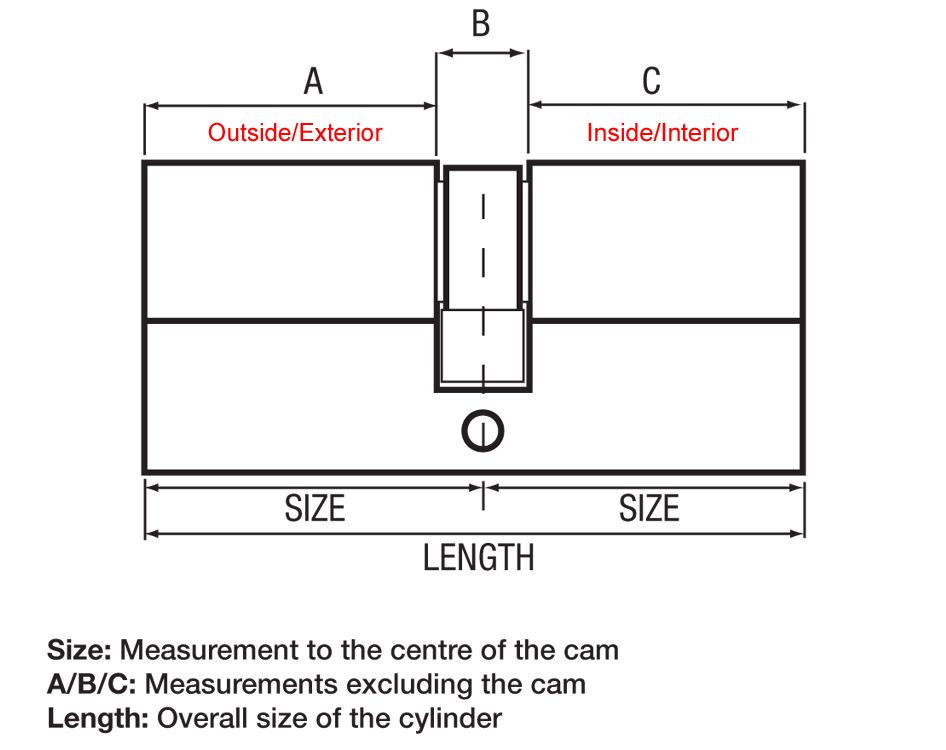
The cylinder should sit flush with the handle or security furniture, or protrude no more than 3 mm on the external side. A longer projection can give an attacker more to grip and increases the risk of snapping.
Measuring handles and lock cases
For UPVC handles and many multipoint locks, record the backset and PZ centres. Backset is the distance from the door edge or forend to the centre of the spindle or cylinder, using the product’s stated reference. PZ is the distance between the centre of the handle spindle and the centre of the cylinder. Also measure the door thickness and check screw positions, spindle arrangement and handle dimensions.
For a mortice lock, measure the lock itself rather than the cut-out in the door:
- Case depth: from the rear of the forend to the back of the lock case.
- Case height: top to bottom of the lock case.
- Forend length and width: the faceplate’s end-to-end length and width.
- Backset and centres: plus the keyhole, spindle or cylinder arrangement.
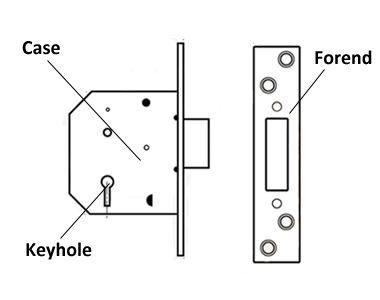
Compare all dimensions, handing and operation with the product specification. Similar-looking locks may have different fixing positions or latch arrangements.
How to change a door lock cylinder: step by step
These steps apply to a standard euro-profile cylinder secured by a retaining screw through the door edge. For a complete mortice lock or multipoint mechanism, follow the product’s fitting instructions or ask a locksmith if you are uncertain.
Tools: the replacement cylinder and keys, a screwdriver to fit the retaining screw, and a ruler or tape measure. Work with the door open throughout.
- Check the new cylinder first. Confirm its profile, internal and external measurements, key/thumbturn arrangement and security orientation. Make sure the external end will not protrude more than 3 mm.
- Remove the handles if needed. Some handles or escutcheons obstruct access to the cylinder. If you need to remove them, keep the screws and parts together.
- Remove the retaining screw. With the door open, locate the long screw in the door-edge faceplate level with the cylinder and unscrew it.
- Take out the old cylinder. Put the key in and turn it slightly while gently pulling the cylinder. The cam needs to line up with the cylinder body before it will slide free. If it resists, adjust the key; do not force it.
- Align and fit the replacement. Turn the new cylinder’s key slightly until its cam aligns, then slide it into place. Keep the correct end facing outside and the thumbturn inside, if fitted. Move the key a little if needed to line up the fixing hole.
- Refit the screw. Tighten it until snug, but do not overtighten. Excessive pressure can bind the cylinder and make the key stiff.
- Test before closing the door. With the door still open, operate the key and thumbturn from both sides. Check that the cylinder turns smoothly and the latch and deadbolt extend and retract fully. Only close the door after it works reliably.
If the key remains stiff, check that the retaining screw is not overtight and that the cylinder is seated correctly. A small amount of graphite or PTFE lock lubricant may help a dry cylinder. Avoid WD-40 as a long-term fix.
When it is not just the cylinder
If replacing the barrel does not solve the problem, the cause may be elsewhere:
- Door dropped or misaligned: the latch or bolts may be rubbing against the keeps. Check whether the door operates more easily when open than when shut.
- Multipoint gearbox failure: a key or handle that will not operate hooks and rollers may indicate a failed centre case or gearbox, not a faulty cylinder.
- Keeps or strike plates: loose, displaced or poorly aligned keeps can stop bolts engaging cleanly.
- Handle with broken spring: a drooping handle may need a replacement handle or a compatible lock case, rather than a new cylinder.
Do not force a key or handle. Call a locksmith if the door is jammed shut, the cylinder will not come out, parts are damaged, or you cannot identify the replacement. A locksmith can also help if a multipoint mechanism needs adjustment or replacement.
A practical security upgrade
If you are replacing a euro cylinder, consider a properly certified anti-snap option. A TS 007 3-star cylinder provides a straightforward upgrade; a TS 007 1-star cylinder can form part of a 3-star rated combination when used with suitable 2-star handles. A 3-star cylinder can also be paired with 2-star handles for additional protection. Check the actual certification and fit, not just the words “anti-snap”. See the range of anti-snap cylinders.
For a typical UPVC door, a correctly sized 3-star cylinder is often the single best-value security upgrade. If replacing a mortice lock, check whether the existing lock is marked BS 3621 and choose a suitable replacement for the door and its requirements. See mortice locks and latches.
Fire and commercial doors: On fire doors, escape doors, communal entrances and doors with a closer or panic hardware, match the existing certification and doorset requirements. Do not replace components by size alone; use a competent person.
Need help getting the right part?
Call 0330 174 0851 (Monday to Friday, 9:30am–4:30pm) or email info@lockshopdirect.co.uk. You can send photos and measurements to help identify the right replacement. Orders placed before 5pm are eligible for same-day dispatch; next-day delivery is available on selected products, with free delivery on orders over £60.
Author: Penny
Back to listing