Gate Locks: How to Secure a Garden Gate Properly (UK Guide)
Monday, 23 November 2026
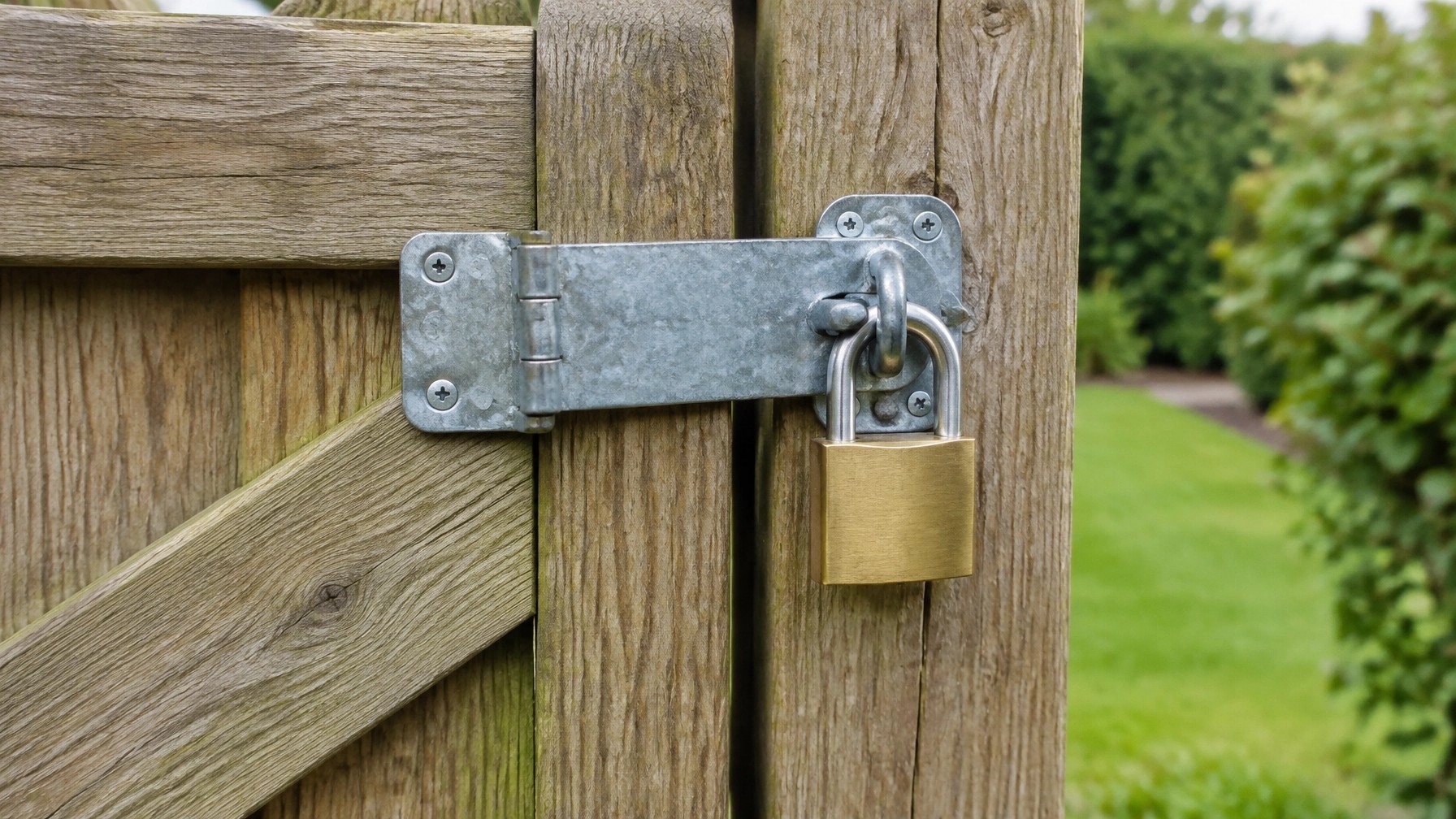
Choose a gate lock to suit the gate’s material and layout, then fit it securely to sound timber or metal so the lock and its fixings are not easy to lever apart.
What to check before choosing a gate lock
The best gate lock depends on whether your gate is timber or metal, single or double, and how much security you need. A simple latch may be enough to keep a garden gate closed, but a padlock and hasp can provide a stronger barrier when fitted with suitable fixings.
Before buying, check:
- Gate material and construction: Is there a solid frame or stile where screws or bolts can be fixed?
- Post condition: Is the post sound, stable and firmly secured in the ground?
- Gate layout: Is it a single leaf or a pair of gates that meet in the middle?
- Exposure to weather: Choose suitable finishes and a padlock designed for outdoor use.
- Access needs: Who needs a key or code, and how often will the gate be opened?
For a shed or outbuilding, the same principle applies: the lock is only as strong as the hasp, fixings and surface it attaches to. Browse hasps and staples alongside the padlocks and chains range to match the parts.
Gate lock types compared
Security levels below are relative, not a guarantee. The quality of the lock, fitting and gate structure all matter. Cost bands are relative hardware costs only; installation is not included.
| Hasp and staple with keyed padlock | Locking a single gate or shed door | Timber or suitable metal frame | Basic to good, depending on the parts and fixing | Fit the hasp and staple across the closing edge; choose a shrouded design to limit access to the shackle | Lower–mid |
| Padbolt | Holding one gate leaf in place, often as part of a double-gate setup | Timber or metal | Basic to moderate as a bolt; add a padlock where lockable | Fix to a sound frame and line up the bolt with a secure socket or keep | Lower–mid |
| Mortice or rim gate lock | A more permanent, integrated lock on a compatible gate | Usually timber; some models suit metal gates | Moderate, depending on the lock and gate | Check gate thickness, handing and installation requirements before cutting or fixing | Mid–higher |
| Garden gate latch | Keeping a frequently used gate closed | Timber or metal, subject to latch compatibility | Basic; many latches are not designed as security locks | Confirm that the latch suits the gate’s thickness and closing direction; add a lockable option if required | Lower |
| Keyed padlock | A straightforward lock where keys can be managed | Timber or metal, with a suitable hasp or staple | Varies from basic to high, depending on padlock and fittings | Match the shackle size to the staple; choose outdoor-suitable materials | Lower–higher |
| Combination padlock | Shared access without handing out keys | Timber or metal, with a suitable hasp or staple | Varies by padlock and fittings | Check that the code mechanism is practical outdoors and that the shackle fits the staple | Lower–mid |
| Chain and padlock for double gates | Securing two leaves together where fixed fittings are impractical | Timber or metal | Basic to moderate; depends on chain, padlock and attachment points | Keep the chain short and secure it so it cannot simply be lifted off | Mid–higher |
A keyed padlock is usually a practical choice when a small number of people need access. A combination padlock can suit shared access, but only if the code can be kept secure and the lock is suitable for the conditions. See our combination padlocks for options.
For a higher-security application, consider a suitable high-security padlock. A stronger padlock will not compensate for a weak hasp, short screws or a rotten gate post.
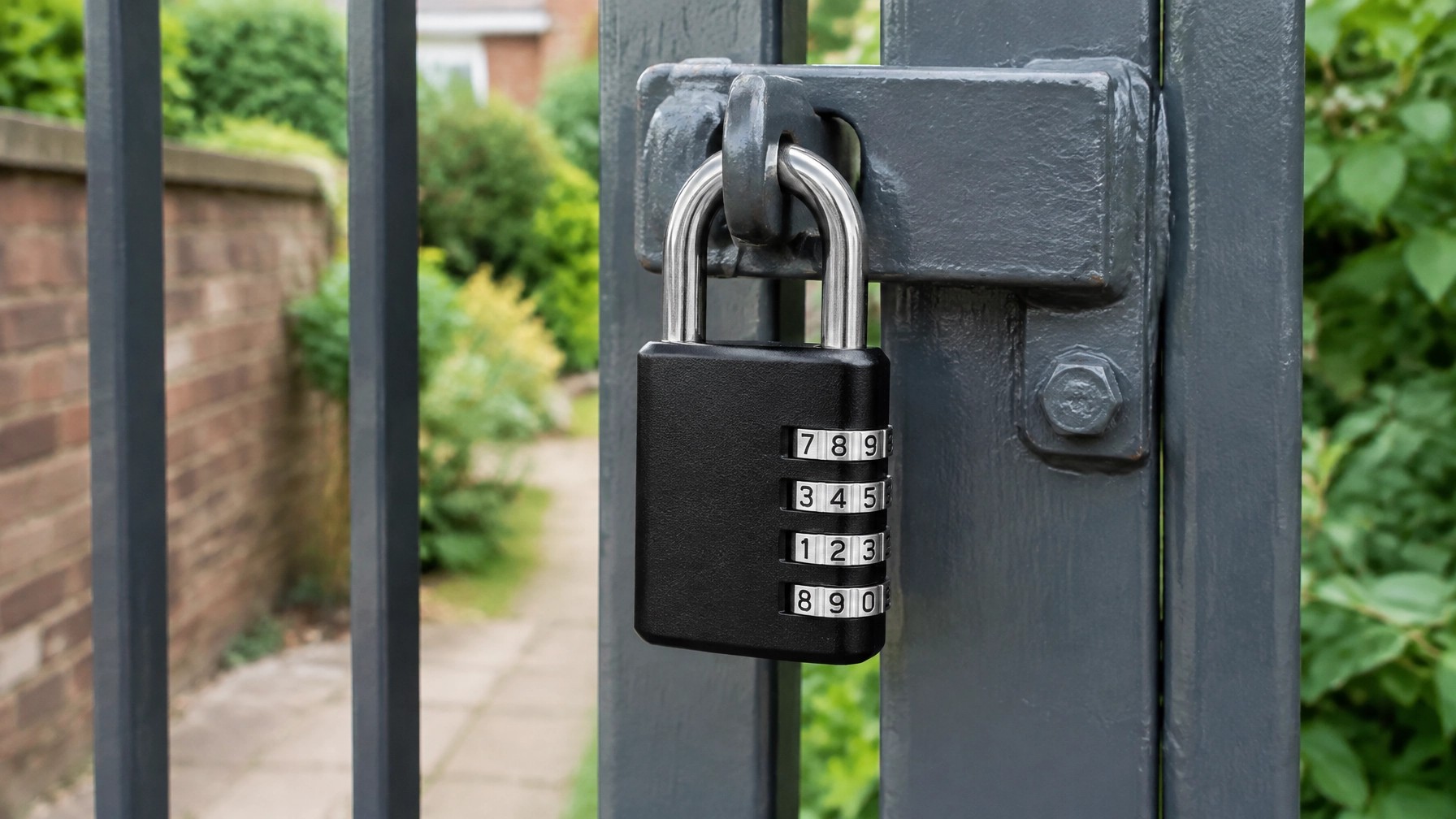 Black four-dial combination padlock fitted in a steel gate latch on a metal gate
How to fit a gate lock so it resists leverage
The aim is to make the gate, post, lock and fixings work together. If a fitting stands proud, is screwed into thin boards, or leaves room to insert a tool, force may be applied to the fitting rather than the padlock itself.
What you’ll need
- The chosen gate lock, hasp and staple, or padbolt
- A padlock that fits the staple or eye without excessive spare room
- Fixings suitable for the gate and post; use through-bolts where practical on timber
- Drill and suitable bits, screwdriver or spanner, tape measure and pencil
- A way to support the gate if it needs adjustment while you work
Fitting steps
-
Check the gate and hinge side first. Close the gate and inspect the hinges, pins and screws. A strong lock on the closing edge will not help if an exposed hinge pin can be removed or the gate can be lifted off. Where practical, secure hinge fixings and use suitable anti-lift arrangements.
-
Check the post and gate frame. The post must be firm, and the gate must have sound timber or a suitable metal section where the lock will attach. Do not fit heavy hardware into rotten timber, thin cladding or a loose post. Repair or replace the weak material first.
-
Position the hasp and staple with the gate shut. Hold the parts in their intended positions and check that they meet squarely. The hasp should sit flat, with little room behind it for a tool. A security hasp with a shroud can cover the staple and reduce access to the padlock shackle.
-
Mark and prepare the fixing points. Check that screws or bolts will not split the timber or foul the frame. Drill pilot holes where appropriate. On timber, through-bolts with washers and nuts can make the fixing harder to pull out than short screws; position nuts and accessible fixings on the protected side where possible.
-
Fit the hardware and test the alignment. Tighten the fixings, then open and close the gate several times. It should close without forcing the lock into place. If the gate has sagged or the post has shifted, correct the alignment rather than relying on the padlock to pull the parts together.
-
Check padlock shackle clearance. The shackle must pass through the staple and lock freely, but avoid a large gap that leaves it exposed to leverage. A closed- or shrouded-shackle padlock can make it harder to reach the shackle with tools. Check the available clearance before ordering.
-
For double gates, prevent the leaves spreading apart. A chain and padlock should be short enough that the leaves cannot be pushed apart to create a gap. Secure the chain around the frames so it cannot slide off a post or leaf. For a more stable arrangement, use a suitable padbolt or drop bolt to hold one leaf, then lock the other to the fixed structure.
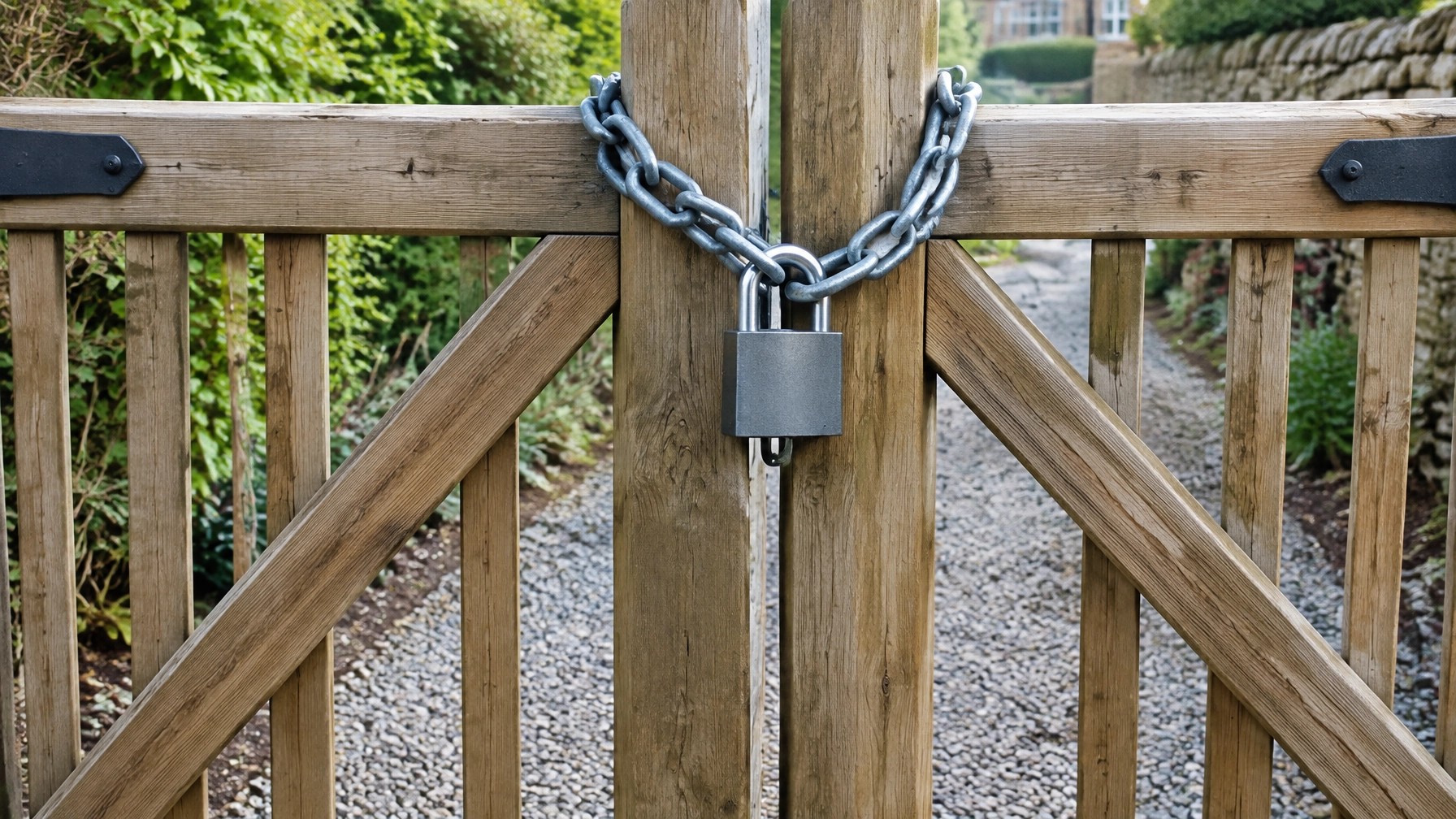 Heavy-duty chain and keyed padlock securing two timber double gates
Choosing outdoor padlocks and chains
Outdoor locks are exposed to rain, dirt and temperature changes, so consider corrosion resistance as well as security. A lock that becomes stiff or difficult to operate may be left unlocked; choose a type suited to the location and maintain it in line with the manufacturer’s instructions.
For exposed positions, compare the available weatherproof padlocks. For a chain-and-padlock setup, make sure the chain is appropriate for the job and cannot be slipped off the gate. The retailer’s guide to smart padlocks may also help if you are considering keyless access.
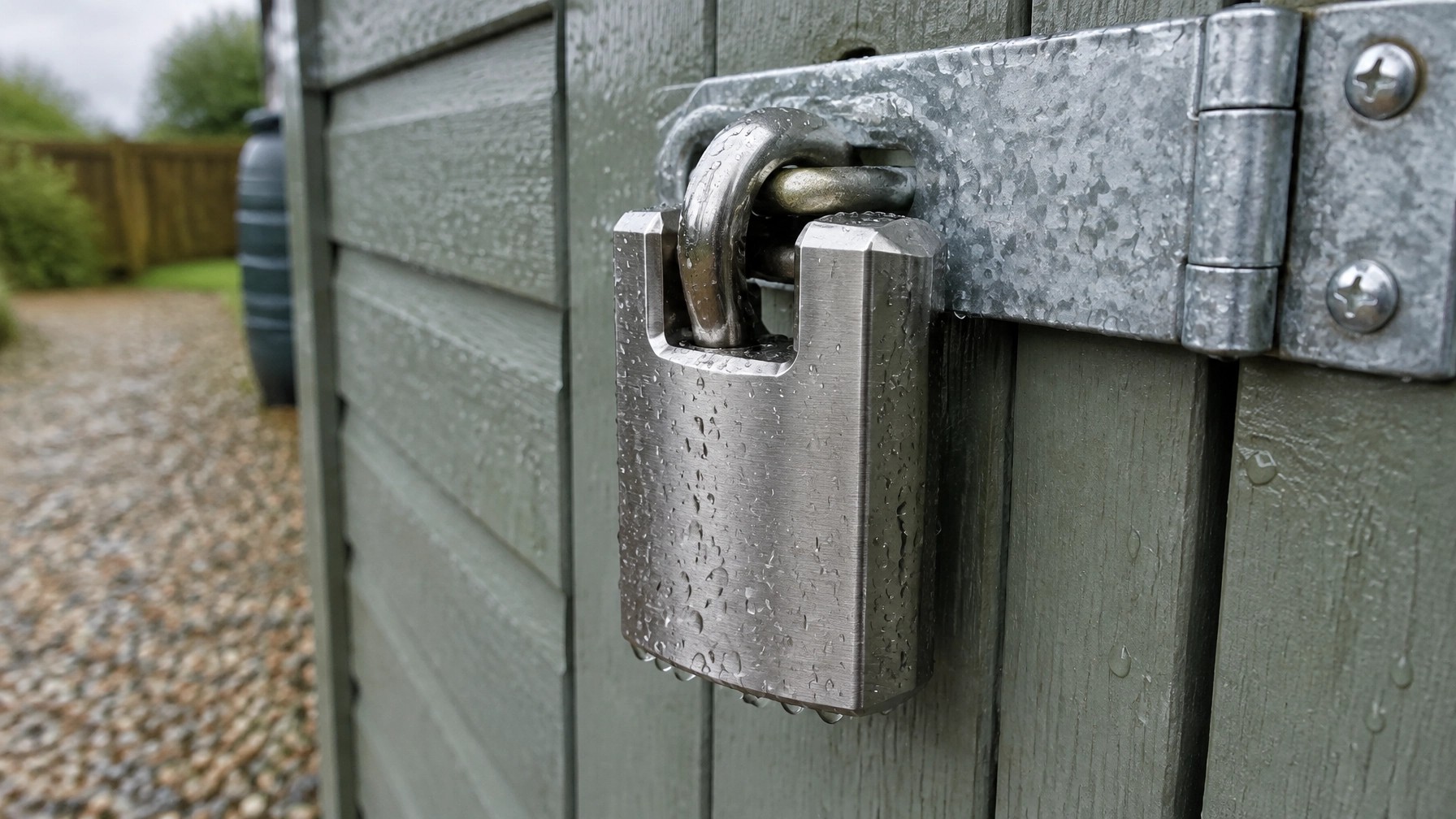 Weatherproof stainless-steel padlock locked through a hasp on a timber shed door
A note for trade and commercial sites
For a commercial or shared-access gate, consider who needs access, how keys or codes will be controlled, and whether the lock affects an escape route or emergency access. Do not use a general-purpose padlock where it could obstruct required escape or access arrangements. If the gate forms part of a fire or escape strategy, match the hardware to the site requirements and consult a competent person rather than guessing.
Need help choosing the right gate lock?
The gate’s material, fitting space and padlock clearance all affect which parts will work together. Call Lock Shop Direct on 0330 174 0851, Monday to Friday, 9:30am–4:30pm, or email info@lockshopdirect.co.uk for help choosing the right padlock or chain.
Have your gate material, measurements and a description of the fitting area ready when you get in touch. Next step: measure the gate and post, then compare suitable locks and fittings before ordering.
Author: Penny
Back to listing